
Criminal Law Division · Bayside Solicitors · Since 1998
Criminal lawyersin Frankston.Five minutes from court.
Got a date at Frankston Magistrates' Court? There's a process, and it's far more predictable than it feels right now. We explain every step, and we appear in court ourselves.
Free initial conference for most matters.
1998
Practising in Frankston since
60,000+
Matters handled across the firm
5 min
About, from the court door
Free
Initial conference for most matters
Worth knowing first
Imprisonment is a sentence of last resort in Victoria.
A court has to be satisfied that no other sentence is appropriate before it can impose one. The question worth focusing on is usually whether a conviction gets recorded, and that is the part preparation actually changes.
What this site is
The process, set out in the order it actually happens
Most people charged with an offence in Frankston have never been inside a courtroom. The confusing part is rarely the law. It is the sequence: what the date on the paperwork is for, who will be in the room, and what is decided when.
Bayside Solicitors has run criminal matters out of Frankston since 1998. Over 28 years the firm has handled 60,000+ matters across all its practice areas, and it is the largest firm on the Mornington Peninsula. Our criminal solicitors appear at Frankston Magistrates’ Court themselves rather than briefing the work out to a barrister who has read the file that morning.
That is the reason this site exists in the shape it does. The firm’s main site sets out what we do for each type of charge. This one sets out what the court does, week by week, because that is the question people actually ring up and ask. If you want the offence-by-offence detail, it is on the main site and every page here links across to it.
None of it is legal advice. It is general information about court procedure in Victoria, current at the date it was written, and your matter will have facts in it that change the answer.
Start to finish
Five stages, and where most matters end
Very few criminal matters run all the way to a contested hearing. Knowing which stage you are at tells you what is still available to you.
- 01
You are charged, or you are summonsed
Police either bail you to appear on a date, or post you a summons and a charge sheet. Both name a court and a date. The charge sheet also lists the charges by section number, which is the first thing worth reading properly, because the section decides which court can hear it and what the magistrate is allowed to do.
- 02
The first mention
Your first appearance. Nobody gives evidence and nothing is decided about whether you did it. The court finds out whether you are pleading guilty or not guilty, whether you have a lawyer, and whether the police have handed over the brief of evidence. If you plead guilty and it is straightforward, it can be sentenced that day. If not, it gets a date for the next step.
- 03
The brief of evidence
If you are pleading not guilty, the prosecution has to serve the material it intends to rely on: statements, records of interview, CCTV, forensic certificates. Reading the brief is where most matters are actually won or narrowed, because it shows what the police can prove rather than what they have alleged.
- 04
The contest mention
A hearing in front of a magistrate whose job is to see whether the matter can resolve, and if it cannot, to work out how long the contested hearing needs and which witnesses have to attend. A large share of matters end here, often on fewer or lesser charges than they started with.
- 05
The contested hearing, or the plea
If it did not resolve, witnesses give evidence and the magistrate decides. If it did resolve, or you were always pleading guilty, the day is a plea: your circumstances, the material you have gathered, and what sentence should follow. Either way it ends in an outcome that day in most summary matters.
Why it matters who stands up
We appear in court ourselves
A criminal matter is decided in a room, by a person, on a day. Continuity between the solicitor who read your brief and the advocate who addresses the magistrate is not a nicety.
Since 1998
The firm has been in Frankston for 28 years, in the same court, in front of the same bench. Local practice is knowing how a list runs, not just what the Act says.
One office, five minutes away
36 Dandenong Road West, Frankston VIC 3199. If something happens at court and you need to come in afterwards, you can walk it.
Free initial conference for most matters
Bring the charge sheet and the brief if you have it. The first conversation is about what you are actually facing, before you decide anything.
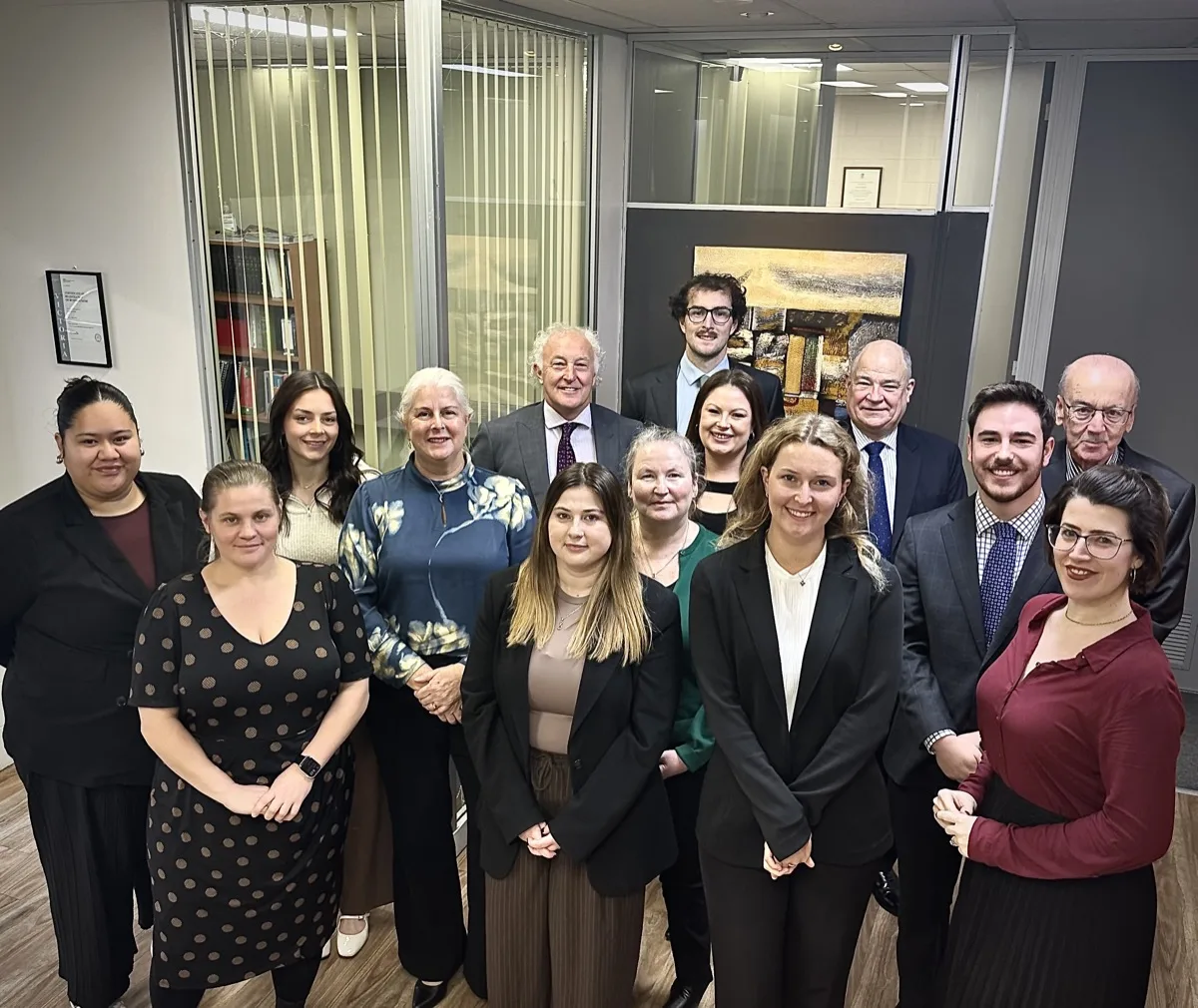
Who you will meet
About five minutes from the court door.
The office is at 36 Dandenong Road West, Frankston VIC 3199, a short drive from Frankston Magistrates’ Court.
Free initial conference for most matters. Call us and we will tell you where you stand before you commit to anything.
Common questions
Before your first appearance
Do I have to go to court if I have a lawyer?
In most criminal matters, yes. The Magistrates' Court expects an accused person to be present unless it has excused you, and for a plea the magistrate usually wants to see you. There are exceptions, mostly for minor matters where a lawyer can appear on your behalf, but treat attendance as the default and ask before you assume otherwise.
What happens if I miss my court date?
The court can hear the matter without you and sentence you in your absence, or it can issue a warrant for your arrest, which is the more serious outcome. If you have already missed a date, that is a reason to get advice immediately rather than to wait for something to arrive in the post. A matter that can be explained on the day it is raised is usually much easier to fix.
Will I get a criminal record?
Not automatically. A magistrate can find a charge proven and still decide not to record a conviction, and diversion resolves a matter without any finding of guilt at all. Whether a conviction is recorded depends on the offence, your history, and what the court is told about the effect a conviction would have on your work and life. It is one of the things worth preparing for properly.
Can I change my plea?
Yes, and it happens often. People plead not guilty at a first mention before they have seen the brief of evidence, then change to a plea of guilty once they have. Going the other way, from guilty to not guilty, is possible but harder once a plea has been formally entered, and the court will want a proper explanation. Either way, do it with advice rather than at the counter.
Where to go next
Frankston Magistrates' Court
Where it is, what time to get there, which courtroom, and what actually happens on a mention day.
The contest mention
The hearing that decides whether your matter runs as a contest or resolves. Most matters end here.
Which court hears your charge
Summary, indictable, and indictable triable summarily. Why some Frankston matters end up in Melbourne.
Sentencing outcomes
Diversion, a good behaviour bond, a fine, a community corrections order, and what a conviction means.
Talk to us
Frankston office, five minutes from the court. Free initial conference for most matters.